

Last Updated 48 minutes ago
As an Amazon Associate I earn from qualifying purchases. This page contains affiliate links.

HTFS Verdict
A strong buy for production coordinators, emerging managers and producers organising a growing team. Choose the third edition for a substantial office reference that explains how the details fit together.
- Best for: Production coordinators, assistant coordinators, production managers and producers building a more organised production office.
- Edition: Third edition, Michael Wiese Productions, January 2025; paperback ISBN 9781615933600.
A production office that loses track of one supplier approval can cost the shoot time without anyone on the floor seeing what went wrong. Deborah Patz’s Film Production Management 101 is worth buying because it explains the systems behind that apparently small detail. It connects the paperwork to the people, money and decisions it supports.
For a coordinator moving up or a producer building a more capable office, this is the kind of reference that earns its shelf space. You get a clearer view of what needs to happen next, who needs to know and what should already have been settled.
It Shows How the Office Fits Together
A rental confirmation is not an isolated email. It can affect an approval, a purchase order, the cost picture and the return at wrap. Understanding that chain makes it easier to collect the right information the first time.
Patz covers both production management and production coordination, following the project from prep through post and audit. The book deals with subjects such as budgets, cash flow, script revisions, locations and production reporting. That scope is useful because the office has to carry information across the entire job.
The practical benefit is continuity. When you understand where a document is going, you stop treating it as something to finish and forget. You can see why an incomplete booking, an unclear approval or an outdated script page becomes somebody else’s problem.
The Paperwork Has a Purpose
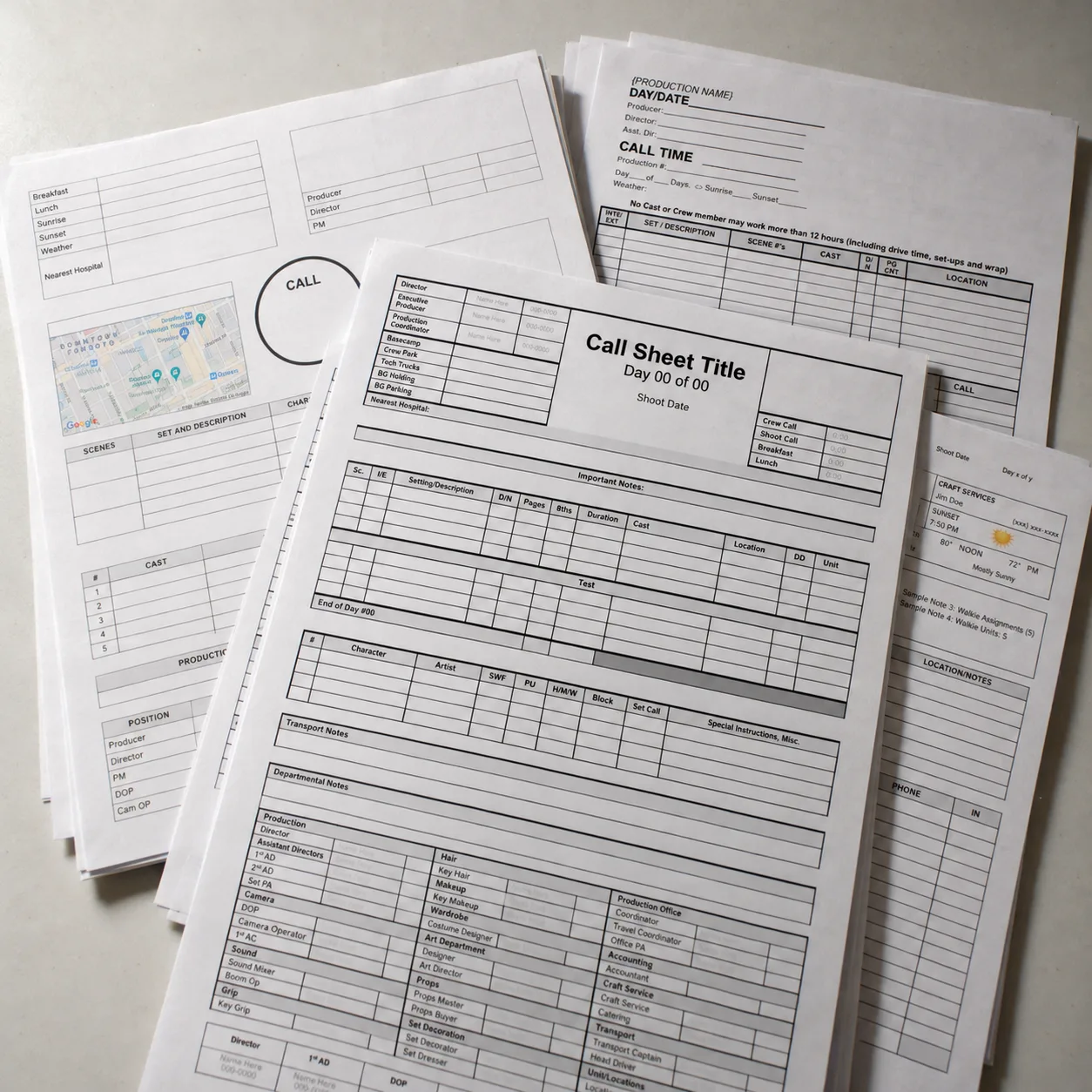
Production forms are easy to collect. Knowing what belongs in them, who checks them and how they are used is the harder part. This is where a detailed office reference becomes more valuable than another folder full of blank templates.
Take the supplier example. A crew member asks for an additional item, the supplier agrees to send it and the invoice arrives later. If nobody knows who approved it or which job it belongs to, an ordinary hire becomes an avoidable chase through messages and memories.
The answer is not more paperwork for its own sake. It is a reliable route from request to approval to record. Patz’s emphasis on the whole production gives a coordinator a framework for thinking through those handoffs.
It also makes the book useful beyond the office team. Producers who understand the work can ask for realistic systems and give coordinators the information they need. That is a better starting point than expecting the office to absorb every loose end without time or context.
Why the Third Edition Is the One to Consider
The third edition arrived in January 2025, with 36 chapters and downloadable forms. Its updated focus includes sustainable production, respectful workplaces and managing people. Those additions belong in a management book because getting a plan to work depends on how the team operates.
The full subtitle is Production Management and Coordination in an Era of the Respectful Workplace and Sustainable Practices. Older listings may show Management and Coordination in a Digital Age, which identifies the earlier edition.
If you are buying your first copy, start with the third edition. If an older copy already serves you well, the useful question is whether the new people-management and workplace coverage fills a gap in your existing reference shelf.
Who Gets the Most Value?
Assistant coordinators stepping up should get plenty from the broader view of the job. New production managers can use it to connect the office’s daily information with the larger production plan. Producers handling growing teams can use it to understand what a properly organised office needs.
Read it around the problem you are trying to solve. A coordinator preparing for wrap needs different material from someone opening an office. The reference format makes more sense when you return to the relevant section as the job develops.
The main drawback is scale. A three-person short does not need every system used on a substantial production, and an experienced coordinator will already know some of the material. Take the parts that support your production rather than adding administration simply because a form exists.
Should You Buy This or Surviving Production?
Film Production Management 101 is the stronger first purchase. Patz folded her older coordination book, Surviving Production, into this later work and expanded the management coverage. Most readers do not need both.
Buy this if you want to become more useful in the production office, especially as your responsibilities grow. Its strongest selling point is the connection between the details and the whole job. A purchase order, a report and a phone call all become easier to handle when you understand what they are there to accomplish.
My Rating: 4.5/5 Stars!
What Other People Are Saying
There is useful support beyond the publisher's endorsements. Raindance reviews the earlier edition in detail, while current-edition praise highlights the expanded management material.
Baptiste Charles, Raindance, April 2021, reviewing the second edition
Charles praises the book for explaining both how production-office tasks work and why they matter. His review singles out the attention to communication, reports and other jobs that receive less attention in filmmaking guides. He also values the reference material and full-project perspective. That supports buying it for practical office understanding, rather than expecting a quick survey of glamorous production roles.
Kat Montagu, filmmaker and educator, author-published third-edition endorsement
Montagu highlights the new managing-people chapter as an especially valuable addition. Her recommendation points to a useful reason for considering the updated edition: production management includes handling people as well as paperwork. This is an endorsement published by Patz, rather than an independent review, but it identifies a specific addition that existing owners can evaluate.
Kieran Anderson, Goodreads, March 2024, reviewing an earlier edition
Anderson finds the guide comprehensive for newcomers but says much of the material was already familiar and did not substantially change his perspective. That is a fair buying distinction for an established coordinator. The same breadth that makes the book useful when you are learning the office may feel like review once those systems are part of your everyday work.
The buying case is strongest for readers moving into coordination or management. Experienced office staff should judge the new edition by the responsibilities and topics they want to strengthen.
Buying Advice
Buy the third edition if you want a clearer system for the production office and a reference that remains useful as the jobs get bigger. This is the Patz book to choose first.
Check the edition, format and condition before ordering. The link below is for the edition discussed in this review.